Beyond the resort
Zanzibar is more than one perfect beach.
Stone Town, the tidal south and the crystalline north reveal three different sides of the same island. You have to move to meet them.
More than one beach
For many travellers, Zanzibar means one thing: a beautiful beach, a comfortable resort and a week spent moving between a sunbed and the Indian Ocean.
There is nothing wrong with that. Sometimes rest is exactly what a journey should provide. Staying in one resort can also be convenient and more affordable.
But Zanzibar is not one beach. Move through the island and its personality changes: from the layered streets of Stone Town to the tidal landscapes of the south and, finally, the crystalline water of the north.
The Zanzibar most people know
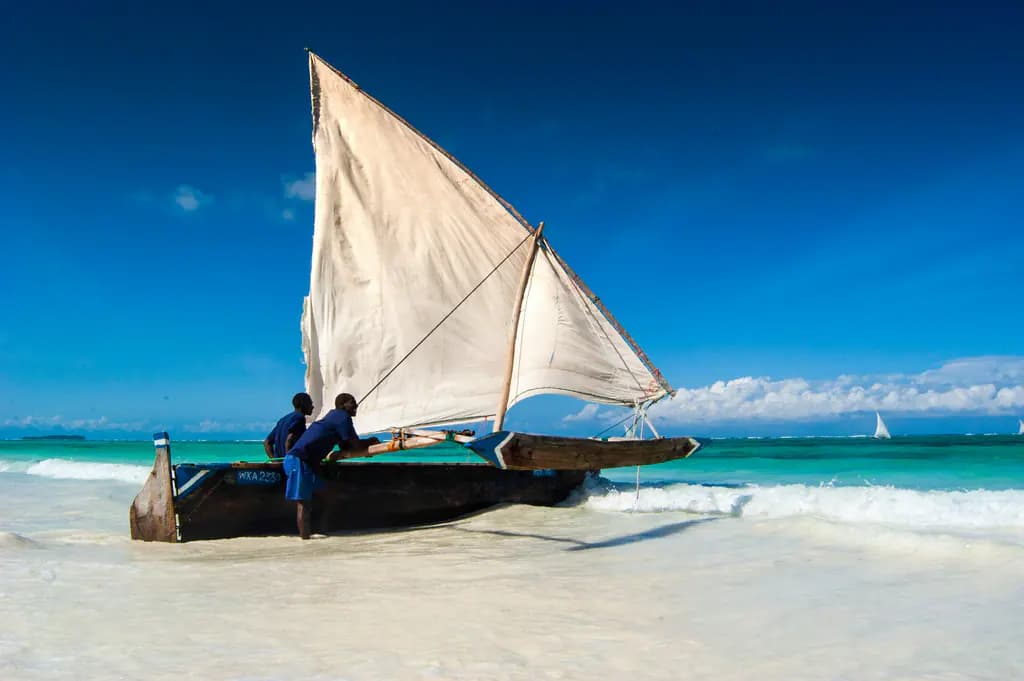
The northern coast offers much of what travellers imagine before arriving: turquoise water, pale sand and conditions that make swimming easier throughout the day.
It is beautiful—and it deserves its reputation. This is also where many large resorts and organised holidays are concentrated. It works exceptionally well if your priority is comfort, the sea and the simplicity of having everything in one place.
The problem is not choosing the north. It is believing that the north is the whole of Zanzibar.
Stone Town: beauty in the layers
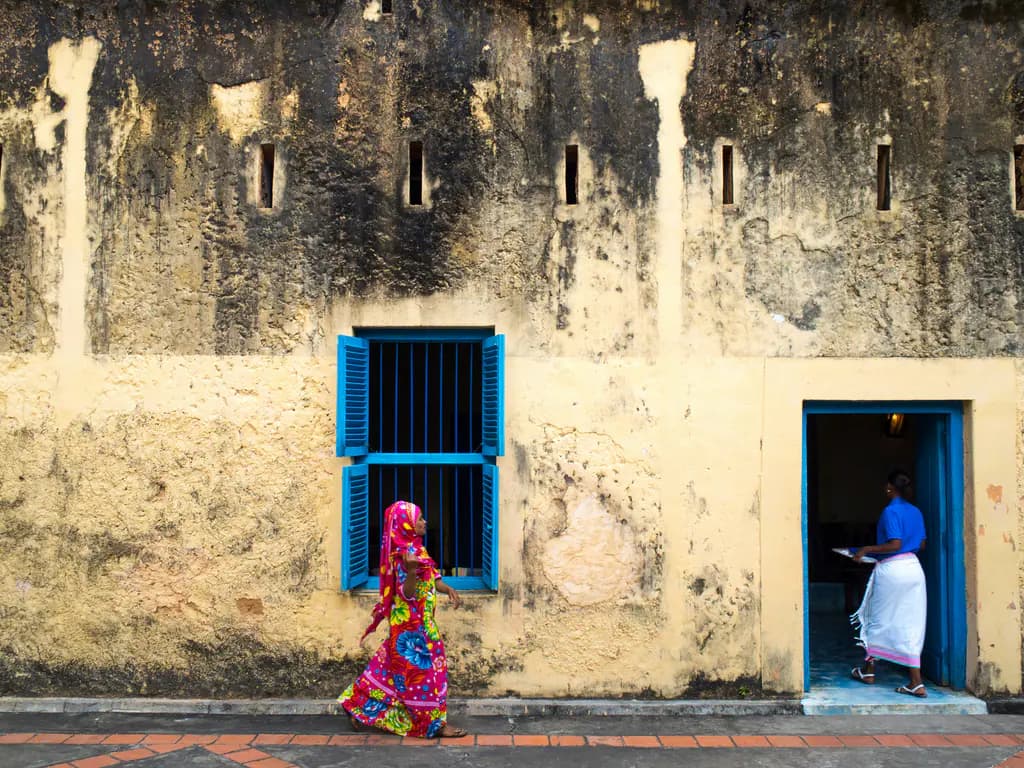
Stone Town does not introduce itself as neatly as a postcard. Its beauty is found in carved doors, shaded courtyards, weathered façades, narrow streets, small workshops and glimpses of the ocean appearing between buildings.
It carries the cultures that shaped Zanzibar. Its architecture, food, markets and craftsmanship reveal an island influenced by Africa, Arabia, India and Europe—without belonging completely to any one of them.
It is a place to explore slowly. Stone Town should not simply be where you land before transferring to the beach. It is the beginning of understanding Zanzibar.
The south: when the ocean steps back
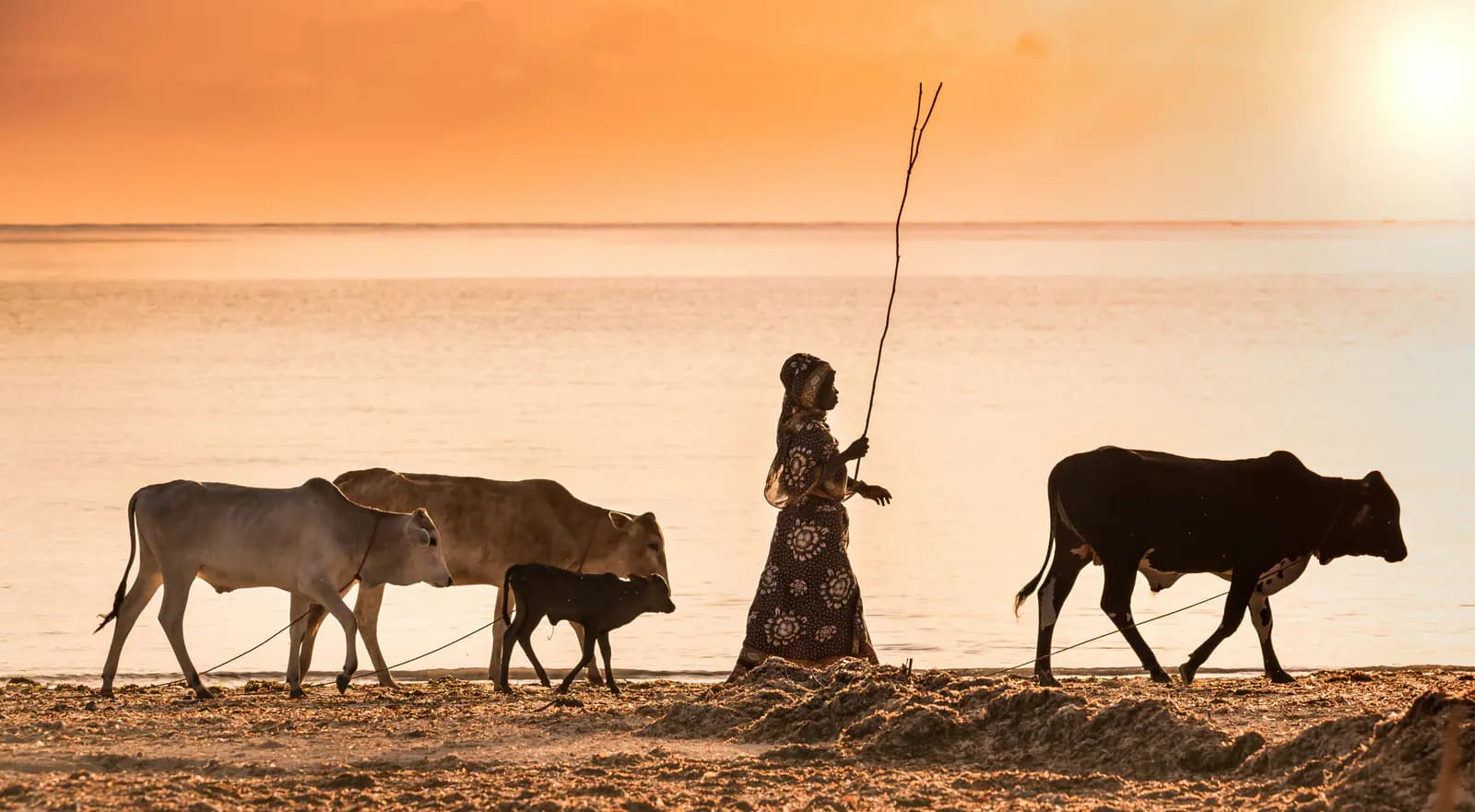
Here, the tides transform the landscape dramatically. When the ocean retreats, it can leave vast stretches of sand and shallow water behind. Swimming is not always possible whenever you want—and that is precisely why conventional beach holidays often give this coast less attention.
But judging the south only by how easily you can swim means missing what makes it special. People walk across the exposed seabed, collect seaweed and work with what the ocean provides. The tide helps organise daily life.
The south is long walks, quiet villages and time that feels less scheduled. Encounters happen naturally, respectfully and without turning everyday life into an attraction. It may not always offer the easiest swimming. It offers atmosphere, perspective and a closer sense of place.
The north: the sea you imagined
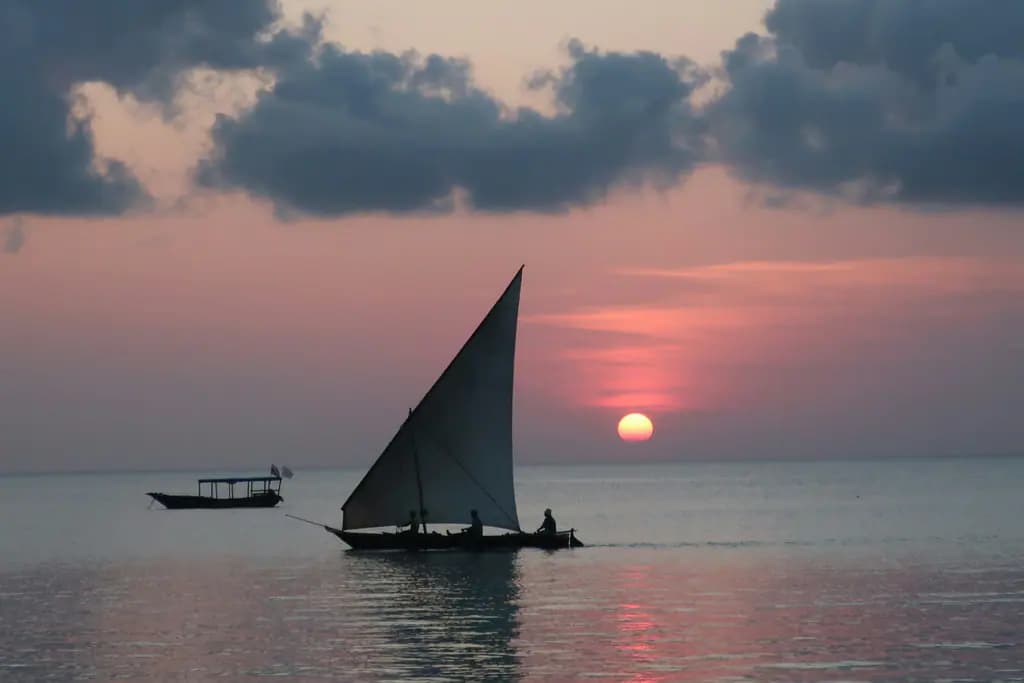
After Stone Town and the south, reaching the north feels different. The water is still extraordinary, the beaches are still beautiful and the pleasure of swimming has not diminished. But now the sea is part of a larger story.
You have seen the streets behind the postcards, watched the tide reshape the coast and encountered some of the work, colour and everyday life that make the island what it is.
The north gives you the Zanzibar you imagined. Moving through the island helps you understand what surrounds it.
Why moving matters
An itinerant journey is not automatically better than a resort stay. It simply offers something different. A resort is designed to make staying easy. A journey is designed to help you notice change.
None of these experiences replaces the others. Together, they create a fuller picture of the island.
- The history and craftsmanship of Stone Town.
- The tides, daily life and quieter atmosphere of the south.
- The extraordinary sea and easier swimming of the north.
A journey, not just a stay
Travelling beyond the resort does not mean rejecting comfort. Nor does it mean collecting as many stops as possible. It means choosing enough movement to understand where you are.
It means leaving room for the beach, while also making room for streets, people, work, food and the different rhythms of the coast. Because Zanzibar deserves more than being used as a beautiful background. It deserves to be travelled.